
The Comprehensive Guide to Commercial Dishwashers: Choosing the Right One for Your Business
Understanding Types of Commercial Dishwashers
Selecting the appropriate type of dishwasher for your commercial kitchen is vital for enhancing both efficiency and sanitation. Commercial dishwashers are available in various styles, each tailored to meet specific operational needs. Familiarizing yourself with these types will empower you to make an informed choice that aligns with your business requirements.
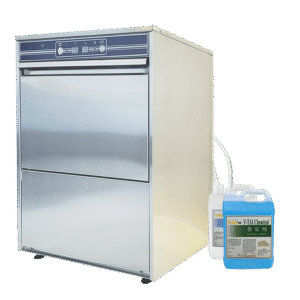
1. Under-Counter Dishwashers
Under-counter dishwashers are compact units designed to fit beneath standard kitchen counters. They are perfect for smaller establishments like cafes, bars, or restaurants with limited space. These machines typically manage smaller loads and are effective for quickly washing dishes, glasses, and utensils.
- Pros:
- Space-saving design
- Easy to operate
- Quick wash cycles
- Cons:
- Limited capacity
- May not accommodate heavy-duty items like large pots and pans
Transitioning to larger operations, we encounter the next type of dishwasher designed for increased demand.
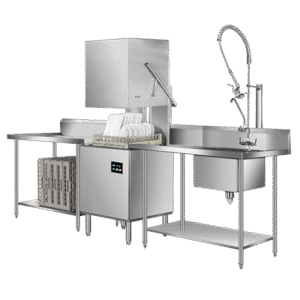
2. Door-Type Dishwashers
Door-type dishwashers, also referred to as rack dishwashers, are larger units that allow for loading racks of dishes through a front door. They are well-suited for medium to high-volume operations, such as larger restaurants or catering businesses.
- Pros:
- Higher capacity than under-counter models
- Efficient cleaning for various dish types
- Often equipped with energy-saving features
- Cons:
- Requires more space
- Higher initial investment
As we progress to even larger capacities, conveyor dishwashers are engineered for high-volume operations.
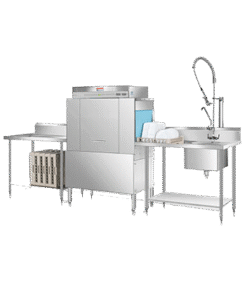
3. Conveyor Dishwashers
Conveyor dishwashers are designed for high-volume operations, allowing dishes to be continuously fed through the machine on a conveyor belt. These units are commonly found in large restaurants, hotels, and institutional kitchens.
- Pros:
- Extremely high capacity
- Automated operation reduces labor costs
- Efficient cleaning for large quantities
- Cons:
- Requires significant space and infrastructure
- Higher maintenance costs
Continuing the trend of high capacity, flight-type dishwashers represent the pinnacle of efficiency for industrial-level operations.
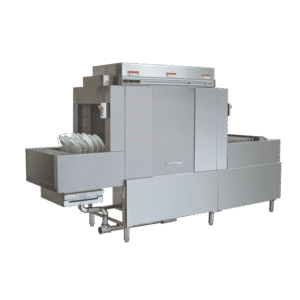
4. Flight-Type Dishwashers
Flight-type dishwashers are the most advanced option, ideal for industrial-level operations. They resemble conveyor dishwashers but are designed for even larger volumes, often incorporating multiple wash and rinse zones.
- Pros:
- Maximum efficiency and speed
- Suitable for the largest kitchens and banquet facilities
- Customizable configurations
- Cons:
- Very high cost
- Requires significant space and utility considerations
Comparison Table
| Type | Capacity | Ideal For | Space Requirement | Cost |
|---|---|---|---|---|
| Under-Counter | Low | Small cafes, bars | Minimal | Low |
| Door-Type | Medium | Medium restaurants | Moderate | Medium |
| Conveyor | High | Large restaurants | Significant | High |
| Flight-Type | Very High | Industrial kitchens | Extensive | Very High |
In summary, selecting the right type of commercial dishwasher depends on your business size, volume of dishes, and available space. Understanding the specific functionalities and limitations of each type will ensure a wise investment, ultimately enhancing your kitchen’s efficiency and service quality.
Key Factors to Consider When Buying a Commercial Dishwasher
When choosing a commercial dishwasher for your business, several critical factors must be considered to ensure a well-informed decision. Investing in the right dishwasher not only boosts efficiency but also enhances the overall cleanliness and sanitation of your dining or service environment. Below are the key factors to keep in mind:
Capacity
The capacity of a commercial dishwasher is essential, as it directly impacts operational efficiency. Capacity is typically measured in racks per hour or dishes per hour. To determine the appropriate capacity for your business, consider the following:
- Volume of Dishes: Estimate the number of dishes you’ll need to wash during peak hours.
- Type of Business: Different establishments have varying needs. For instance, a busy restaurant will require a higher capacity than a small café.
| Business Type | Recommended Capacity |
|---|---|
| Fast Casual Dining | 30-50 racks/hour |
| Fine Dining | 20-30 racks/hour |
| Cafes | 10-20 racks/hour |
| Catering Services | 40-60 racks/hour |
With capacity established, the next consideration is the type of dishwasher that best fits your operational needs.
Type of Dishwasher
There are several types of commercial dishwashers available, each suited for different environments and needs. Understanding which type aligns with your business model is crucial:
- Under-Counter Dishwashers: Ideal for small to medium-sized establishments, these fit under standard counters and are perfect for low-volume washing.
- Door-Type Dishwashers: Suitable for medium to large operations, these machines allow for easy loading and unloading, making them efficient for moderate volumes.
- Conveyor Dishwashers: Best for high-volume environments, such as large restaurants or institutions, these systems continuously move dishes through the wash cycle.
Following the type of dishwasher, energy and water efficiency must also be considered to ensure sustainability and cost-effectiveness.
Energy and Water Efficiency
In today’s environmentally conscious market, selecting an energy-efficient dishwasher is beneficial not only for the planet but also for your bottom line. Look for models that are ENERGY STAR certified, as they can significantly reduce utility costs. Additionally, consider machines that use less water without compromising cleaning effectiveness, contributing to lower water bills and a reduced environmental footprint.
Next, it is vital to think about the maintenance and support available for your chosen dishwasher.
Maintenance and Support
Lastly, consider the long-term maintenance needs of the dishwasher. Investigate the warranty and support options available with your purchase. A reliable service provider is crucial for minimizing downtime. Ensure that the dishwasher you choose has easily accessible replacement parts and that the manufacturer offers robust customer service.
By carefully evaluating these factors—capacity, type of dishwasher, energy and water efficiency, and maintenance support—you can confidently choose a commercial dishwasher that meets the specific needs of your business and enhances your operational efficiency.
Comparing Commercial Dishwashers: A Side-by-Side Analysis
When it comes to selecting the right commercial dishwasher for your business, understanding the differences between various models is crucial. Each type of dishwasher has unique features, advantages, and limitations that can significantly impact your operations. Below, we will conduct a side-by-side analysis of three common types of commercial dishwashers: undercounter, door-type, and conveyor dishwashers.
Dishwasher Types Overview
| Feature | Undercounter Dishwasher | Door-Type Dishwasher | Conveyor Dishwasher |
|---|---|---|---|
| Capacity | Low to moderate | Moderate to high | High |
| Space Requirement | Compact, fits under counters | Requires floor space | Requires significant floor space |
| Cycle Time | 1-2 minutes | 2-3 minutes | Continuous |
| Ideal for | Small restaurants, cafes | Medium-sized operations | Large kitchens, high-volume operations |
| Energy Efficiency | Generally efficient | Moderate efficiency | Often less efficient due to continuous operation |
| Initial Cost | Lower initial investment | Moderate investment | Higher initial investment |
| Maintenance | Easy to maintain | Moderate maintenance | Requires professional service |
Transitioning from the overview, it’s important to highlight key considerations that will influence your decision.
Key Considerations
When comparing commercial dishwashers, several key factors can influence your decision:
- Capacity: Assess your daily dishwashing needs. Undercounter models are suitable for small to medium establishments, while conveyor models are ideal for high-volume operations.
- Space Availability: Measure your kitchen space. Undercounter models are compact and fit under counters, making them ideal for smaller kitchens. In contrast, conveyor dishwashers require more floor space but offer greater efficiency for large operations.
- Cycle Time: Consider how quickly you need dishes cleaned. Undercounter models can wash a smaller load within 1-2 minutes, while conveyor models provide a continuous flow, significantly reducing wait times.
- Energy Efficiency: With rising energy costs, it’s essential to choose a dishwasher that aligns with your sustainability goals. Undercounter models typically consume less energy, while conveyor models may have higher operational costs.
- Initial Cost vs. Long-Term Savings: While undercounter models have a lower upfront cost, evaluate the long-term savings on utilities and maintenance. Conveyor dishwashers may require a higher initial investment but could save time and labor costs in busy environments.
As we explore maintenance tips, it becomes evident that proper upkeep is essential for optimal performance.
Maintenance Tips for Optimal Performance
Maintaining your commercial dishwasher is crucial for ensuring its longevity and efficiency. Regular upkeep not only maximizes performance but also minimizes the risk of unexpected breakdowns that can disrupt your business operations. Here are some essential maintenance tips to keep your dishwasher running smoothly.
Daily Maintenance Checklist
To ensure optimal performance, perform the following daily maintenance tasks:
- Clean the filter: Remove and rinse the filter to eliminate food particles and debris that can clog the system.
- Check the spray arms: Inspect the spray arms for blockages and ensure they are rotating freely. Clean them with warm soapy water if necessary.
- Inspect door seals: Examine the door seals for wear and tear. Replace them if you notice any cracks or damage to prevent leaks.
- Wipe down the exterior: Use a damp cloth to clean the exterior surfaces, removing any grease or food residues.
- Run a cleaning cycle: Utilize a dishwasher cleaner specifically designed for commercial machines to enhance performance and eliminate odors.
Transitioning to a weekly routine, additional maintenance tasks will help address deeper cleaning needs.
Weekly Maintenance Tasks
In addition to daily tasks, weekly maintenance is essential to address deeper cleaning needs:
- Deep clean the interior: Use a non-corrosive cleaner to scrub the interior surfaces, including walls and racks, to remove any buildup.
- Calcium and mineral buildup: Check for hard water deposits and use a descaling solution if necessary to maintain efficiency and prolong the life of your dishwasher.
- Inspect hoses and connections: Examine all hoses for leaks or wear, and ensure connections are tight to prevent water loss.
For ongoing reliability, consider implementing monthly and seasonal checks.
Monthly and Seasonal Maintenance
For ongoing reliability, consider implementing these monthly and seasonal checks:
| Task | Frequency |
|---|---|
| Inspect electrical components | Monthly |
| Check water temperature | Monthly |
| Test the detergent dispenser | Monthly |
| Schedule professional servicing | Every 6 months |
| Review user manual for updates | Seasonal |
Regular professional servicing is critical. A qualified technician can perform thorough checks and repairs that may not be evident during routine maintenance. This proactive approach can save you from costly repairs in the long run.
Conclusion
Incorporating these maintenance tips into your regular routine will not only enhance the performance of your commercial dishwasher but also contribute to the overall efficiency of your kitchen operations. A well-maintained dishwasher ensures clean dishes, satisfied customers, and a smoothly running business. Remember, a little effort in upkeep can lead to significant savings and peace of mind.
Frequently Asked Questions (PAA Integration)
What are the different types of commercial dishwashers?
When considering the right commercial dishwasher for your business, it’s essential to understand the various types available. Each type serves different needs and operational scales:
| Type | Description | Ideal For |
|---|---|---|
| Undercounter Dishwashers | Compact units that fit under standard counters, suitable for small operations. | Cafes, small restaurants, bars |
| Door-Type Dishwashers | Larger than undercounter models, these dishwashers feature a door that swings open. | Mid-sized restaurants, catering services |
| Conveyor Dishwashers | High-capacity units that use a conveyor belt to move dishes through the washing cycle. | Large restaurants, hotels, institutions |
| Flight Type Dishwashers | The most robust option, designed for extremely high volumes, with a continuous flow system. | Large-scale operations, hospitals, and banquet facilities |
How do I determine the right size dishwasher for my business?
Choosing the correct size is crucial for efficiency and cost-effectiveness. Here are some factors to consider:
- Volume of Dishes: Estimate the number of dishes you wash daily. A higher volume may require a larger unit.
- Space Availability: Measure the space where the dishwasher will be installed to ensure it fits comfortably.
- Type of Dishware: Consider the types of dishes you use, as some dishwashers accommodate specific sizes better than others.
- Water and Energy Efficiency: Larger dishwashers may use more water and energy, so evaluate your utility costs when making a decision.
What features should I look for in a commercial dishwasher?
When selecting a commercial dishwasher, consider these essential features:
- Temperature Control: Look for models with built-in temperature controls for optimal cleaning and sanitization.
- Cycle Options: Different cycle settings allow for flexibility in cleaning various types of dishware.
- Energy Efficiency Ratings: Higher efficiency can lead to significant savings on water and energy bills.
- Ease of Use: User-friendly controls and intuitive design can streamline operations and reduce training time for staff.
What maintenance is required for commercial dishwashers?
Regular maintenance ensures the longevity and efficiency of your dishwasher. Consider this checklist:
- Daily Cleaning: Remove food debris and clean the filters.
- Weekly Inspections: Check spray arms for blockages and ensure proper drainage.
- Monthly Deep Cleaning: Use a commercial dishwasher cleaner to eliminate mineral buildup.
- Annual Professional Service: Schedule a professional inspection to ensure all components are functioning correctly.
By addressing these frequently asked questions, you can make informed decisions that will enhance your kitchen’s efficiency and maintain high hygiene standards.