
The Ultimate Guide to Conveyor Dishwashers
What is a Conveyor Dishwasher?
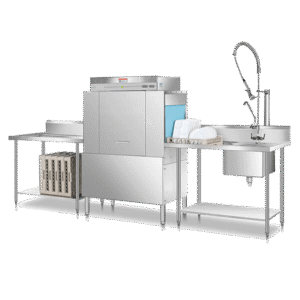
A conveyor dishwasher is a specialized piece of commercial dishwashing equipment designed to optimize the cleaning process for large quantities of dishes, utensils, and cookware. Unlike traditional dishwashers, which typically operate in a batch mode, conveyor dishwashers utilize a continuous belt system. This allows items to be loaded at one end and retrieved clean at the other. This design enhances efficiency and significantly reduces labor costs and turnaround time in high-demand environments such as restaurants, cafeterias, and catering services.
Functionality of Conveyor Dishwashers
The primary function of a conveyor dishwasher is to automate the dishwashing process, making it more efficient and less labor-intensive. The operation begins when dirty dishes are placed on the conveyor belt, which transports them through various washing, rinsing, and drying stages. The entire process is designed to maximize water and energy efficiency while ensuring that dishes are sanitized effectively. Conveyor dishwashers typically use high-temperature or chemical sanitizing methods to meet health and safety standards, making them ideal for establishments that require a high level of cleanliness.
Differences Between Conveyor and Traditional Dishwashers
While both conveyor and traditional dishwashers serve the same fundamental purpose of cleaning dishes, their operational mechanics and ideal applications differ significantly. Below is a comparison highlighting the key differences:
| Feature | Conveyor Dishwasher | Traditional Dishwasher |
|---|---|---|
| Operation Mode | Continuous (conveyor belt) | Batch (load and unload) |
| Capacity | High-volume (suitable for large operations) | Lower volume (ideal for smaller settings) |
| Speed | Fast (dishes are cleaned in a matter of minutes) | Slower (depends on the batch size) |
| Labor Requirements | Reduced (often requires fewer staff) | Higher (more manual handling required) |
| Space Requirements | Requires more space for the conveyor system | More compact and can fit in smaller kitchens |
Understanding these differences is crucial for businesses looking to optimize their dishwashing processes.
Key Features of Conveyor Dishwashers
Conveyor dishwashers are essential in high-volume commercial kitchens, known for their speed and efficiency. Understanding their critical features can help businesses choose the right model for their needs.
Speed
One of the standout features of conveyor dishwashers is their remarkable speed. These machines are designed to process large quantities of dishes in a short time, making them ideal for busy restaurants, cafeterias, and catering services. Most conveyor dishwashers can wash and rinse dishes in a matter of minutes, with some models achieving a cycle time of as little as 2 to 3 minutes per load. This efficiency not only enhances productivity but also helps maintain a steady flow of clean dishes, ensuring that service is uninterrupted during peak hours.
Efficiency
Efficiency is a key consideration when selecting a conveyor dishwasher. These machines are engineered to optimize water and energy usage without compromising cleaning performance. Many models feature advanced wash systems that use high-pressure jets and strategically placed spray arms to ensure thorough cleaning while minimizing water consumption. Additionally, energy-saving modes and eco-friendly designs are increasingly common, allowing businesses to reduce their utility costs and environmental impact. The combination of efficient washing and drying processes can significantly lower overall operating costs, making conveyor dishwashers a smart investment for any commercial kitchen.
Capacity
Another critical feature of conveyor dishwashers is their capacity. These machines are available in various sizes, catering to different kitchen scales and needs. A typical conveyor dishwasher can handle anywhere from 200 to over 1,000 dishes per hour, depending on the model. This high capacity is essential for establishments that serve large volumes of food, as it allows for continuous operation without the need for frequent downtime. The design of conveyor dishwashers also facilitates the seamless flow of dishes through the machine, ensuring that dirty items are quickly processed and clean dishes are readily available for service.
Drying Methods
Effective drying is crucial for maintaining hygiene and ensuring that dishes are ready for immediate use. Conveyor dishwashers employ various drying methods, including:
- Heat Recovery Systems: These systems utilize heat generated during the wash cycle to warm the rinse water, enhancing drying efficiency.
- Forced Air Drying: Many conveyor dishwashers feature built-in fans that blow hot air over the dishes, speeding up the drying process and reducing water spots.
- Chemical Drying Agents: Some models use specialized drying agents that aid in the drying process, especially for glassware and plastic items.
When selecting a conveyor dishwasher, it’s important to consider which drying method aligns best with your operational needs and the types of dishes you frequently wash.
In summary, the key features of conveyor dishwashers—speed, efficiency, capacity, and drying methods—are essential elements that can significantly impact a commercial kitchen’s workflow and productivity. Understanding these features will empower businesses to make informed decisions and choose the right equipment to meet their unique demands.
Choosing the Right Conveyor Dishwasher for Your Business
Selecting the right conveyor dishwasher for your business is crucial to ensuring efficiency and maintaining high standards of cleanliness in your kitchen. With the myriad of options available, it’s essential to consider several key factors that align with your operational needs, kitchen size, and dish volume.
Assess Your Kitchen Size
Before diving into specific models, assess the physical space available in your kitchen. Measure the area where the conveyor dishwasher will be installed to ensure that the model you choose fits comfortably without obstructing workflow. Consider the following:
- Width and Height: Ensure that the dishwasher can fit through doorways and into the designated space.
- Ventilation: Some models may require additional space for ventilation, especially if they produce steam.
- Accessibility: The placement should allow easy access for loading and unloading dishes.
Evaluate Dish Volume
Understanding your dishwashing needs is vital. Analyze your daily dish volume to choose a model that can handle your requirements without compromising efficiency. Here’s a quick reference table to help you determine the right capacity based on your dish volume:
| Dish Volume per Day | Recommended Conveyor Dishwasher Type |
|---|---|
| Up to 500 dishes | Compact Conveyor Dishwasher |
| 500 to 1,500 dishes | Standard Conveyor Dishwasher |
| 1,500 to 3,000 dishes | High-Volume Conveyor Dishwasher |
| 3,000+ dishes | Industrial Conveyor Dishwasher |
Consider Operational Needs
Different businesses have varying operational needs that can influence your choice of conveyor dishwasher. Here are some considerations:
- Speed of Operation: If your business experiences peak hours with high dish turnover, opt for a model with a faster wash cycle.
- Energy Efficiency: Look for energy-efficient models that can help reduce utility costs in the long run.
- Ease of Use: Choose a model with intuitive controls and easy loading/unloading mechanisms to streamline operations for your staff.
- Maintenance Requirements: Consider how often the dishwasher will need servicing and the availability of parts and support.
Checklist for Selecting the Right Model
When you’re ready to make your choice, use the following checklist to ensure you’ve covered all bases:
- [ ] Assess kitchen space and layout
- [ ] Analyze daily dish volume
- [ ] Determine required wash speed
- [ ] Evaluate energy efficiency ratings
- [ ] Ensure ease of use for staff
- [ ] Review maintenance and support options
By carefully considering these factors, you can select a conveyor dishwasher that not only meets your current needs but also supports the growth and efficiency of your business in the long run.
Comparing Popular Conveyor Dishwasher Types
When it comes to choosing the right conveyor dishwasher for your commercial kitchen, understanding the various types available is crucial. Each type has its unique advantages and drawbacks, making them suitable for different applications. Below, we explore the most popular conveyor dishwasher types, outlining their pros and cons.
Rack Conveyor Dishwashers
Rack conveyor dishwashers are designed for high-volume operations, making them a popular choice in large restaurants and cafeterias. They utilize racks to hold dishes and move them through the washing process.
- Pros:
- High Capacity: Ideal for establishments that require washing a large number of dishes quickly.
- Versatility: Can handle various types of dishware, including plates, glasses, and utensils.
- Energy Efficiency: Many models feature energy-saving options, reducing water and power consumption.
- Cons:
- Initial Cost: Higher upfront investment compared to other types.
- Space Requirements: Requires significant floor space, which might be a limitation for smaller kitchens.
Suitable Applications: Large restaurants, hotels, and institutions where speed and volume are priorities.
Flight Type Conveyor Dishwashers
Flight type conveyor dishwashers offer continuous operation, using a chain-driven system to transport dishes through the wash cycle. They are suitable for very high-volume environments.
- Pros:
- Continuous Operation: Capable of washing hundreds of racks per hour without stopping.
- Customizable: Can be tailored to specific kitchen layouts and needs.
- Labor Savings: Reduces the need for manual handling, allowing for a more streamlined operation.
- Cons:
- Complex Installation: More complicated to install and maintain due to mechanical components.
- Higher Maintenance Costs: Potential for increased repair costs over time.
Suitable Applications: Large-scale operations such as banquet facilities, hospitals, and catering services where maximum efficiency is essential.
Undercounter Conveyor Dishwashers
Undercounter conveyor dishwashers are smaller units that fit under countertops, making them suitable for limited spaces. They combine the benefits of conveyor systems with compact design.
- Pros:
- Space-Saving: Ideal for kitchens with limited floor space.
- Ease of Use: Generally easier to operate and maintain than larger systems.
- Cost-Effective: Lower initial investment compared to larger conveyor models.
- Cons:
- Lower Capacity: Not suitable for very high-volume operations.
- Limited Features: May lack advanced features found in larger models.
Suitable Applications: Small to medium-sized restaurants, cafes, and bars where space is at a premium but efficiency is still needed.
Summary Table
| Type | Pros | Cons | Suitable Applications |
|---|---|---|---|
| Rack Conveyor Dishwashers | High capacity, versatile, energy-efficient | Higher initial cost, space requirements | Large restaurants, hotels, institutions |
| Flight Type Conveyor Dishwashers | Continuous operation, customizable, labor-saving | Complex installation, higher maintenance costs | Large-scale operations, catering services |
| Undercounter Conveyor Dishwashers | Space-saving, easy to use, cost-effective | Lower capacity, limited features | Small to medium-sized restaurants, cafes |
Understanding the differences between these conveyor dishwasher types will help you make an informed decision that aligns with your kitchen’s needs and operational capacity. Whether you prioritize volume, space, or budget, there is a suitable option available in the market.
Installation and Maintenance Tips for Conveyor Dishwashers
Installation Guidelines
Installing a conveyor dishwasher requires careful planning and execution to ensure optimal performance and longevity. Follow these step-by-step guidelines to achieve a successful installation:
- Select the Location: Choose a spot that minimizes the distance between the dishwasher and the dish return area. Ensure the location has access to water, drainage, and electrical connections.
- Prepare the Space: Clear the area of any obstructions. The floor should be level, and the surrounding environment should be clean and dry to prevent slips during installation.
- Connect Water Supply: Use appropriate plumbing fittings to connect the dishwasher to the hot water supply. Ensure the water pressure meets the manufacturer’s specifications, typically between 20-90 psi.
- Install Drainage: Proper drainage is crucial. Connect the dishwasher’s drain to the existing plumbing, ensuring it complies with local codes. Use a trap to prevent backflow and odors.
- Electrical Connections: Follow the manufacturer’s guidelines to connect the dishwasher to the power supply. Ensure that all electrical work is done by a qualified electrician, and check that the power supply matches the dishwasher’s requirements.
- Level the Dishwasher: Once in place, use a level to ensure the dishwasher is evenly positioned. Adjust the feet as necessary to prevent vibrations during operation.
- Test the System: Before using the dishwasher, run a test cycle to check for leaks, ensure proper drainage, and verify that all electrical components are functioning correctly.
Regular Maintenance Tips
To ensure your conveyor dishwasher operates efficiently and lasts for years, regular maintenance is essential. Here are some key maintenance tips:
- Daily Cleaning: After each service, remove food debris from the conveyor belt and wash down the interior surfaces with warm, soapy water. This prevents buildup and maintains hygiene.
- Check Filters: Inspect and clean the water inlet and drain filters regularly, ideally every week. Clogged filters can reduce efficiency and lead to mechanical issues.
- Inspect Spray Arms: Periodically check the spray arms for blockages. Clean them with a soft brush or soak them in vinegar to remove any mineral deposits.
- Monitor Chemical Levels: Ensure that the detergent and rinse aid levels are adequate. Running the dishwasher with low chemical levels can affect cleaning performance.
- Check for Leaks: Regularly inspect hoses and connections for leaks. Address any leaks immediately to prevent water damage and maintain optimal performance.
- Schedule Professional Servicing: At least once a year, arrange for a professional technician to conduct a thorough inspection and servicing of the dishwasher. This can help identify potential issues before they become major problems.
By following these installation and maintenance tips, you can ensure that your conveyor dishwasher operates smoothly and efficiently, providing reliable service in your kitchen for years to come.
Frequently Asked Questions (PAA Integration)
What is a conveyor dishwasher and how does it work?
A conveyor dishwasher is a commercial dishwashing machine designed to handle high volumes of dishes, utensils, and cookware efficiently. Unlike traditional dishwashers, conveyor models utilize a continuous belt system that moves items through various washing, rinsing, and drying stages. Items are loaded onto the conveyor at one end and exit clean at the other, significantly speeding up the dishwashing process. The machine typically features multiple wash zones, with powerful jets and high-temperature water to ensure thorough cleaning and sanitization.
What are the benefits of using a conveyor dishwasher?
Conveyor dishwashers offer several advantages for businesses in the food service industry:
- Efficiency: The continuous operation allows for a steady flow of dishes, reducing wait times and increasing productivity.
- Space-saving: These machines are designed to fit in commercial kitchens where space is limited, making them ideal for restaurants and catering services.
- Energy and water savings: Many modern conveyor dishwashers are engineered to use less water and energy compared to traditional models, helping to reduce operational costs.
- Consistent results: Automated washing processes ensure that dishes are cleaned and sanitized uniformly, promoting food safety and hygiene.
- Durability: Built for heavy-duty use, conveyor dishwashers are constructed from robust materials that withstand the rigors of a busy kitchen environment.
How much does a conveyor dishwasher cost?
The cost of a conveyor dishwasher can vary significantly based on several factors, including brand, size, features, and capacity. On average, you can expect to pay anywhere from $15,000 to $50,000. Here’s a breakdown of potential costs:
| Type | Price Range | Key Features |
|---|---|---|
| Basic Models | $15,000 – $25,000 | Standard wash cycles, limited capacity |
| Mid-Range Models | $25,000 – $40,000 | Enhanced features, higher capacity |
| Premium Models | $40,000 – $50,000 | Advanced technology, energy-efficient |
What maintenance is required for conveyor dishwashers?
Proper maintenance is crucial to ensure the longevity and efficiency of conveyor dishwashers. Here’s a checklist of essential maintenance tasks:
- [ ] Daily Cleaning: Remove food debris and clean the conveyor belt and wash arms to prevent clogs.
- [ ] Weekly Inspections: Check for wear and tear on seals, hoses, and electrical connections.
- [ ] Monthly Deep Cleaning: Conduct a thorough cleaning of the interior components, including the pump and filter systems.
- [ ] Quarterly Professional Service: Schedule a professional technician to inspect and service the unit to ensure optimal performance.
- [ ] Regular Chemical Checks: Monitor the levels and effectiveness of detergents and rinse aids used in the machine.
By adhering to these maintenance guidelines, operators can maximize the efficiency and lifespan of their conveyor dishwashers, ensuring they remain a valuable asset in their culinary operations.